
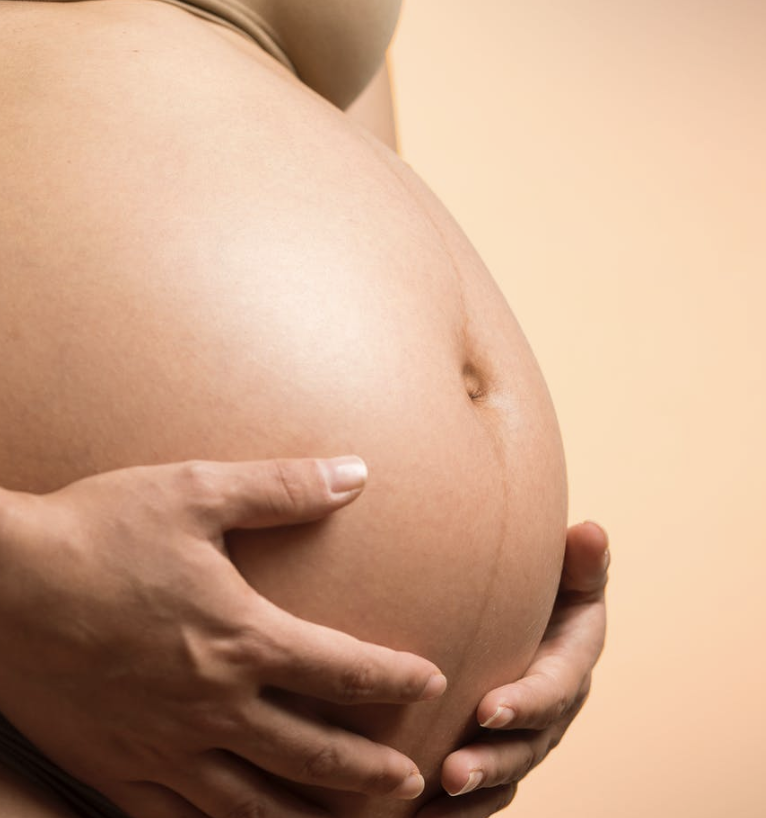
Chapter 7 of my book is about pregnancy.
Pregnancy and childbirth are topics that are rarely taught in school or discussed in public. It is really important to teach this subject because there are certain lifestyle choices that will help us through pregnancy and delivery and may also affect the future health of our children. This is called preconception care. Once pregnant, it is useful to know what happens during each stage of pregnancy and what tests can be done to provide mother and baby with the best possible outcome.
The World Health Organization (WHO) defines a positive pregnancy experience as ‘maintaining physical and sociocultural normality, maintaining a healthy pregnancy for mother and baby (including preventing and treating risks, illness and death), having an effective transition to positive labour and birth, and achieving positive motherhood including maternal self-esteem, competence and autonomy.’
In this chapter I will discuss pre-conception care, genetic tests before you start trying to get pregnant, optimizing getting pregnant, pregnancy tests, what is it like to be pregnant, miscarriage, problems during pregnancy, depression, pre-eclampsia, other high blood pressure disorders during pregnancy, stillbirth, ectopic pregnancy, tests during pregnancy, non-invasive prenatal testing, non-invasive and invasive prenatal diagnosis, birth, pregnancy apps, maternal mortality, termination of pregnancy (abortion), teenage pregnancy, cancer during pregnancy, breast feeding, formula and weaning.
In this blog I am going to give a short summary of preconception care and the genetic tests before you start trying to get pregnant, and tests when you are pregnant.
Preconception care
Preconception care is the preparation a man and a woman should take before they start trying for a baby and it involves simple steps that have been shown to increase the chance of becoming pregnant and having a healthy pregnancy, birth and child which I covered in the blog and video on Chapter 3. Throughout pregnancy, the mother also needs to be careful about her lifestyle choices.
Before a woman becomes pregnant, she needs to be up to date with her German measles vaccine (Rubella), tetanus and flu vaccines and she should start taking folic acid for at least one month before conception. Both the man and woman should be:
- eating a well-balanced diet;
- maintaining a healthy weight;
- taking regular exercise;
- stopping smoking;
- avoiding caffeine;
- avoiding alcohol and other recreational drugs;
- avoiding medication; and
- avoiding occupational hazards.
A healthy weight for the man and woman is essential, because being overweight can affect fertility, pregnancy and the long-term health of the child including childhood obesity and diabetes. As tempting as eating for two is during a pregnancy, it is actually not good for the mother or baby. A woman’s body mass index (BMI) at the start of pregnancy should be between 20–24. A BMI of 25-29 is overweight, and more than 30 is obese. A BMI under 18.5 is underweight.
Genetic tests before you start trying to get pregnant
With advances in genetic testing, it is possible to have a genetic test that will tell whether a couple are at risk of transmitting certain genetic abnormalities to their children. All of us carry rare genetic errors in our DNA and in the majority of people this will not cause a problem. But if both the woman and her partner carry the same rare genetic abnormality, there is a chance it can be passed to their child.
Some couples might know they are at risk because they have a family history or have had a genetic test which has identified this. Recently a technique called expanded carrier screening has been developed. These tests look at hundreds of different genetic diseases for low risk populations.
If a couple are found to be at risk of passing on an inherited disease to their children, they have several options. They may decide not to have any children, or to have kids but not to do any genetic testing. They may opt for preimplantation genetic testing (PGT) which I will discuss when I talk about chapter 10 of my book, or prenatal diagnosis (see below), they could use an egg or sperm donor (so they do not pass on their faulty genes), or they might try to adopt. None of these are an easy option for any couple.
Non-invasive and invasive prenatal diagnosis
There are three methods of prenatal diagnosis:
Non-invasive prenatal diagnosis (NIPD) is similar to NIPT but is used to look at a particular genetic disease. At the moment it can only be offered for a few specific cases, such as when there is a dominant disease that is carried by the father and not the mother. This is because the DNA from the mother interferes with the analysis. But it is hoped that technology will be developed in the near future.
Amniocentesis is the most common method currently used. It is performed around 16 weeks of pregnancy. A needle is inserted into the amniotic sack and about 10-20 ml of amniotic fluid is aspirated.
Chorionic villus sampling (CVS) is performed around 10–12 weeks and a small piece of the placenta is biopsied or aspirated. With both amniocentesis and CVS there is a very small risk of miscarriage, about 0.5-1%.
Whichever method of prenatal diagnosis is used, if the baby is found to have a chromosomal or genetic abnormality, the couple will need to have genetic counselling to decide if they wish to continue with the pregnancy or to terminate. This is a very individual choice and will be incredibly difficult for any couple to go through.
Non-invasive prenatal testing (NIPT)
Non-invasive prenatal testing (NIPT) is a relatively new test where a blood sample is taken from the pregnant woman at ten weeks and DNA sequencing is used to look at the chromosomes of the fetus. This is to look for chromosome abnormalities in the fetus which can happen to any pregnancy. At the moment the results are not considered definite and so if positive, the woman would go on to have prenatal diagnosis.
A growing number of countries offer NIPT to every pregnant woman for free such as Belgium, Iceland, The Netherlands and soon the United Kingdom. At the moment the test only looks at whether there is an extra or missing chromosome, but I have no doubt that soon we will be able to use NIPT to work out the full sequence of the genome of the fetus. It might not be long before our children are born knowing their DNA sequence, either through PGT (Chapter 10) or NIPT, and I will explain the importance of this in Chapter 12.
Read more
Order a signed copy of Your Fertile Years using the Paypal link on
www.joyceharper.com including your full address. The cost is £10 plus postage and packing. Contact yourfertileyears@gmail.com if you would like Joyce to give a talk to any group or at any event.
Blogs
Chapter 1:
Knowing Your Body; Understanding Your Menstrual Cycle And Fertile Window
Chapter 2:
The biological clock, female fertility decline
Chapter 3:
Optimising your reproductive health
Chapter 4:
Everything you should know about sex
Chapter 5:
If you do not want to become pregnant, how do you prevent it?
Chapter 6:
How Can Sexually Transmitted Infections Affect Fertility?
Chapter 7:
What you should know about pregnancy and childbirth
Chapter 8:
Is egg freezing the answer to female fertility decline?
Chapter 9:
What causes infertility and how we test for it
Chapter 10:
Debunking the myths of fertility treatment
Chapter 11:
The menopause is not far away
Chapter 12: What does the future hold for reproduction?
And videos to accompany the blogs on my YouTube Channel
Why I wrote Your Fertile Years
Chapter 1
Chapter 2
Chapter 3
Chapter 4
Chapter 5
Chapter 6
Chapter 7
Chapter 8
Chapter 9
Chapter 10
Chapter 11
Chapter 12
9 things you should know if you want kids in the future


 Chapter 7 of my book is about pregnancy.
Pregnancy and childbirth are topics that are rarely taught in school or discussed in public. It is really important to teach this subject because there are certain lifestyle choices that will help us through pregnancy and delivery and may also affect the future health of our children. This is called preconception care. Once pregnant, it is useful to know what happens during each stage of pregnancy and what tests can be done to provide mother and baby with the best possible outcome.
The World Health Organization (WHO) defines a positive pregnancy experience as ‘maintaining physical and sociocultural normality, maintaining a healthy pregnancy for mother and baby (including preventing and treating risks, illness and death), having an effective transition to positive labour and birth, and achieving positive motherhood including maternal self-esteem, competence and autonomy.’
In this chapter I will discuss pre-conception care, genetic tests before you start trying to get pregnant, optimizing getting pregnant, pregnancy tests, what is it like to be pregnant, miscarriage, problems during pregnancy, depression, pre-eclampsia, other high blood pressure disorders during pregnancy, stillbirth, ectopic pregnancy, tests during pregnancy, non-invasive prenatal testing, non-invasive and invasive prenatal diagnosis, birth, pregnancy apps, maternal mortality, termination of pregnancy (abortion), teenage pregnancy, cancer during pregnancy, breast feeding, formula and weaning.
In this blog I am going to give a short summary of preconception care and the genetic tests before you start trying to get pregnant, and tests when you are pregnant.
Preconception care
Preconception care is the preparation a man and a woman should take before they start trying for a baby and it involves simple steps that have been shown to increase the chance of becoming pregnant and having a healthy pregnancy, birth and child which I covered in the blog and video on Chapter 3. Throughout pregnancy, the mother also needs to be careful about her lifestyle choices.
Before a woman becomes pregnant, she needs to be up to date with her German measles vaccine (Rubella), tetanus and flu vaccines and she should start taking folic acid for at least one month before conception. Both the man and woman should be:
Chapter 7 of my book is about pregnancy.
Pregnancy and childbirth are topics that are rarely taught in school or discussed in public. It is really important to teach this subject because there are certain lifestyle choices that will help us through pregnancy and delivery and may also affect the future health of our children. This is called preconception care. Once pregnant, it is useful to know what happens during each stage of pregnancy and what tests can be done to provide mother and baby with the best possible outcome.
The World Health Organization (WHO) defines a positive pregnancy experience as ‘maintaining physical and sociocultural normality, maintaining a healthy pregnancy for mother and baby (including preventing and treating risks, illness and death), having an effective transition to positive labour and birth, and achieving positive motherhood including maternal self-esteem, competence and autonomy.’
In this chapter I will discuss pre-conception care, genetic tests before you start trying to get pregnant, optimizing getting pregnant, pregnancy tests, what is it like to be pregnant, miscarriage, problems during pregnancy, depression, pre-eclampsia, other high blood pressure disorders during pregnancy, stillbirth, ectopic pregnancy, tests during pregnancy, non-invasive prenatal testing, non-invasive and invasive prenatal diagnosis, birth, pregnancy apps, maternal mortality, termination of pregnancy (abortion), teenage pregnancy, cancer during pregnancy, breast feeding, formula and weaning.
In this blog I am going to give a short summary of preconception care and the genetic tests before you start trying to get pregnant, and tests when you are pregnant.
Preconception care
Preconception care is the preparation a man and a woman should take before they start trying for a baby and it involves simple steps that have been shown to increase the chance of becoming pregnant and having a healthy pregnancy, birth and child which I covered in the blog and video on Chapter 3. Throughout pregnancy, the mother also needs to be careful about her lifestyle choices.
Before a woman becomes pregnant, she needs to be up to date with her German measles vaccine (Rubella), tetanus and flu vaccines and she should start taking folic acid for at least one month before conception. Both the man and woman should be:



0 Comments