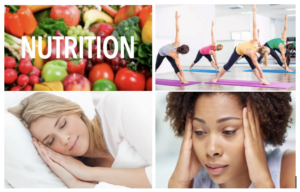
My overarching philosophy for health is to think about the four pillars of wellbeing: nutrition (including our weight and alcohol); exercise; sleep; and our mental health. These can have substantial effects on our reproductive system including: puberty; menstrual cycle; period problems; premenstrual syndrome; fertility; infertility; pregnancy; health of our future children; and menopause.
Pillar of Wellbeing One; Nutrition
The latest scientific evidence for nutritional advice for men and women to look after their reproductive system and when trying to become pregnant, is the same advice for our general health. We should eat a diet containing five a day of fruit and vegetables, low carbohydrates and fat, high protein, omega-3 fatty acids, reduce consumption of trans fats, red meat, alcohol and caffeine. And obviously avoid processed food and
sugar. Many of us are vitamin D deficient, and if so, we will need to take this.
When we are trying to become pregnant, we should take folic acid, and vitamins B12 and D if we are deficient. The World Health Organisation does not recommend a multiple micronutrient supplementation or supplements of vitamin A, B6, C, D and E, unless deficient. Instead, men and women should be eating a healthy diet with adequate protein, fibre, fruit and vegetables.
A woman who has a BMI of 30 or more is likely to take longer to conceive. Men who have a BMI of 30 are likely to have reduced fertility. Obese men have poorer sperm, which can increase their risk of infertility, and the embryos they produce are of poorer quality. Obesity of the man and woman may lead to health issues in their children.
There are studies that show positive and negative effects of drinking tea and coffee. They contain caffeine which is a stimulant. With regards to fertility, caffeine consumption should be in moderation and a recent study has suggested that caffeine should be totally avoided during pregnancy.
The Royal College of Physicians advises that women should drink no more than 14 units of alcohol per week, no more than three units in any one day, and have at least two alcohol-free days a week. A bottle of wine is 10 units. Alcohol may make PMS worse, affects fertility and can make menopausal symptoms worse, such as hot flushes and migraines. Research has been unable to establish if there is any level of alcohol consumption that is ‘safe’ during pregnancy.
I have written many blogs about drinking alcohol – see below.
Pillar of Wellbeing 2; Exercise
I am a huge exercise fan. I became a qualified aerobics teacher in my early twenties and am now an ambassador for This Girl Can, the United Kingdom campaign to encourage women and girls to exercise. I exercise at least four times a week.
I hear too many women tell me they do not have the time to exercise. And many wrongly associate exercise with losing weight. Exercising is about keeping physically and mentally fit. The WHO reports that if you are not active enough, you have a 20-30% increased risk of death compared to people who are active. Lack of physical exercise is one of the leading risk factors of death worldwide and is on the rise in many countries.
Exercising can really help with our menstrual cycles, helping to cope with period pain and PMS. Regular exercise can boost your fertility. Studies have shown that women who exercise regularly become pregnant quicker than those who do not exercise. But studies have shown that moderate exercise is better than excessive exercise in both men and women, except for overweight and obese women where exercise of any intensity is beneficial. There are several scientific studies that show that regular aerobic exercise can reduce many symptoms of the perimenopause including: hot flushes; mood swings; joint pains; and osteoporosis.
I have written many blogs about exercise – see below.
Pillar of Wellbeing 3; Sleep
During sleep, our body repairs and resets. If we do not have enough sleep, it can seriously affect our physical and mental health. A lack of sleep adversely affects our wellbeing, including: making us irritable; affects memory; reduces immunity; can lead to obesity; heart disease; and type 2 diabetes. Ideally we need eight hours of sleep per night.
Multiple studies have shown that sleep quantity and quality, sleep deprivation, and/or disordered sleep, can exert an effect on a number of different hormones involved with reproduction. Studies on women who work shift work have shown that they experience adverse reproductive health outcomes including: menstrual irregularities; dysmenorrhea; increased time to and reduced rates for conception; increased miscarriages; and lower birth weights.
Pillar of Wellbeing 4; Mental health
All of us need to look after our mental health to stay healthy. Mental health problems affect one in four people.
Mental health issues include stress, anxiety, depression and anger.
Stress is defined as a state of mental or emotional strain or tension resulting from adverse or demanding circumstances.
Anxiety is different to stress. Anxiety comes from a place of fear, nervousness and worry. With stress, you know what you are stressed about, but with anxiety you do not.
There are several types of depression which include: mild depression when it has a limited negative effect on your daily life; major depression interferes with most aspects of an individual’s daily life including eating, sleeping and everyday routine activities; and post-natal depression, which can leave new mothers feeling completely overwhelmed, inadequate and unable to cope.
Anger is a normal emotion, caused by frustration, stress, anxiety and learnt behaviour.
Hormones are powerful and can have a huge effect on our mental health at key times of our fertile years: at puberty; during our menstrual cycle; pregnancy; perimenopause; and menopause.
Methods of relaxation include: deep breathing; massage; mindfulness; meditation; yoga; music therapy; etc. Relaxation has been shown to reduce anxiety levels in women undergoing fertility treatment.
Read more
Order a signed copy of Your Fertile Years using the Paypal link on
www.joyceharper.com including your full address. The cost is £10 plus postage and packing. Contact yourfertileyears@gmail.com if you would like Joyce to give a talk to any group or at any event.
Blogs
Chapter 1:
Knowing Your Body; Understanding Your Menstrual Cycle And Fertile Window
Chapter 2:
The biological clock, female fertility decline
Chapter 3:
Optimising your reproductive health
Chapter 4:
Everything you should know about sex
Chapter 5:
If you do not want to become pregnant, how do you prevent it?
Chapter 6:
How Can Sexually Transmitted Infections Affect Fertility?
Chapter 7:
What you should know about pregnancy and childbirth
Chapter 8:
Is egg freezing the answer to female fertility decline?
Chapter 9:
What causes infertility and how we test for it
Chapter 10:
Debunking the myths of fertility treatment
Chapter 11:
The menopause is not far away
Chapter 12: What does the future hold for reproduction?
And videos to accompany the blogs on my YouTube Channel
Why I wrote Your Fertile Years
Chapter 1
Chapter 2
Chapter 3
Chapter 4
Chapter 5
Chapter 6
Chapter 7
Chapter 8
Chapter 9
Chapter 10
Chapter 11
Chapter 12
How is your relationship with alcohol?
Women and alcohol
Effects of drinking during pregnancy
Alcohol and cancer
How alcohol accelerates ageing
Exercise during lockdown
Menopause and exercise


 My overarching philosophy for health is to think about the four pillars of wellbeing: nutrition (including our weight and alcohol); exercise; sleep; and our mental health. These can have substantial effects on our reproductive system including: puberty; menstrual cycle; period problems; premenstrual syndrome; fertility; infertility; pregnancy; health of our future children; and menopause.
Pillar of Wellbeing One; Nutrition
The latest scientific evidence for nutritional advice for men and women to look after their reproductive system and when trying to become pregnant, is the same advice for our general health. We should eat a diet containing five a day of fruit and vegetables, low carbohydrates and fat, high protein, omega-3 fatty acids, reduce consumption of trans fats, red meat, alcohol and caffeine. And obviously avoid processed food and sugar. Many of us are vitamin D deficient, and if so, we will need to take this.
When we are trying to become pregnant, we should take folic acid, and vitamins B12 and D if we are deficient. The World Health Organisation does not recommend a multiple micronutrient supplementation or supplements of vitamin A, B6, C, D and E, unless deficient. Instead, men and women should be eating a healthy diet with adequate protein, fibre, fruit and vegetables.
A woman who has a BMI of 30 or more is likely to take longer to conceive. Men who have a BMI of 30 are likely to have reduced fertility. Obese men have poorer sperm, which can increase their risk of infertility, and the embryos they produce are of poorer quality. Obesity of the man and woman may lead to health issues in their children.
There are studies that show positive and negative effects of drinking tea and coffee. They contain caffeine which is a stimulant. With regards to fertility, caffeine consumption should be in moderation and a recent study has suggested that caffeine should be totally avoided during pregnancy.
The Royal College of Physicians advises that women should drink no more than 14 units of alcohol per week, no more than three units in any one day, and have at least two alcohol-free days a week. A bottle of wine is 10 units. Alcohol may make PMS worse, affects fertility and can make menopausal symptoms worse, such as hot flushes and migraines. Research has been unable to establish if there is any level of alcohol consumption that is ‘safe’ during pregnancy.
I have written many blogs about drinking alcohol – see below.
Pillar of Wellbeing 2; Exercise
I am a huge exercise fan. I became a qualified aerobics teacher in my early twenties and am now an ambassador for This Girl Can, the United Kingdom campaign to encourage women and girls to exercise. I exercise at least four times a week.
I hear too many women tell me they do not have the time to exercise. And many wrongly associate exercise with losing weight. Exercising is about keeping physically and mentally fit. The WHO reports that if you are not active enough, you have a 20-30% increased risk of death compared to people who are active. Lack of physical exercise is one of the leading risk factors of death worldwide and is on the rise in many countries.
Exercising can really help with our menstrual cycles, helping to cope with period pain and PMS. Regular exercise can boost your fertility. Studies have shown that women who exercise regularly become pregnant quicker than those who do not exercise. But studies have shown that moderate exercise is better than excessive exercise in both men and women, except for overweight and obese women where exercise of any intensity is beneficial. There are several scientific studies that show that regular aerobic exercise can reduce many symptoms of the perimenopause including: hot flushes; mood swings; joint pains; and osteoporosis.
I have written many blogs about exercise – see below.
Pillar of Wellbeing 3; Sleep
During sleep, our body repairs and resets. If we do not have enough sleep, it can seriously affect our physical and mental health. A lack of sleep adversely affects our wellbeing, including: making us irritable; affects memory; reduces immunity; can lead to obesity; heart disease; and type 2 diabetes. Ideally we need eight hours of sleep per night.
Multiple studies have shown that sleep quantity and quality, sleep deprivation, and/or disordered sleep, can exert an effect on a number of different hormones involved with reproduction. Studies on women who work shift work have shown that they experience adverse reproductive health outcomes including: menstrual irregularities; dysmenorrhea; increased time to and reduced rates for conception; increased miscarriages; and lower birth weights.
Pillar of Wellbeing 4; Mental health
All of us need to look after our mental health to stay healthy. Mental health problems affect one in four people.
Mental health issues include stress, anxiety, depression and anger.
Stress is defined as a state of mental or emotional strain or tension resulting from adverse or demanding circumstances.
Anxiety is different to stress. Anxiety comes from a place of fear, nervousness and worry. With stress, you know what you are stressed about, but with anxiety you do not.
There are several types of depression which include: mild depression when it has a limited negative effect on your daily life; major depression interferes with most aspects of an individual’s daily life including eating, sleeping and everyday routine activities; and post-natal depression, which can leave new mothers feeling completely overwhelmed, inadequate and unable to cope.
Anger is a normal emotion, caused by frustration, stress, anxiety and learnt behaviour.
Hormones are powerful and can have a huge effect on our mental health at key times of our fertile years: at puberty; during our menstrual cycle; pregnancy; perimenopause; and menopause.
Methods of relaxation include: deep breathing; massage; mindfulness; meditation; yoga; music therapy; etc. Relaxation has been shown to reduce anxiety levels in women undergoing fertility treatment.
Read more
Order a signed copy of Your Fertile Years using the Paypal link on www.joyceharper.com including your full address. The cost is £10 plus postage and packing. Contact yourfertileyears@gmail.com if you would like Joyce to give a talk to any group or at any event.
Blogs
Chapter 1: Knowing Your Body; Understanding Your Menstrual Cycle And Fertile Window
Chapter 2: The biological clock, female fertility decline
Chapter 3: Optimising your reproductive health
Chapter 4: Everything you should know about sex
Chapter 5: If you do not want to become pregnant, how do you prevent it?
Chapter 6: How Can Sexually Transmitted Infections Affect Fertility?
Chapter 7: What you should know about pregnancy and childbirth
Chapter 8: Is egg freezing the answer to female fertility decline?
Chapter 9: What causes infertility and how we test for it
Chapter 10: Debunking the myths of fertility treatment
Chapter 11: The menopause is not far away
Chapter 12: What does the future hold for reproduction?
And videos to accompany the blogs on my YouTube Channel
Why I wrote Your Fertile Years
Chapter 1
Chapter 2
Chapter 3
Chapter 4
Chapter 5
Chapter 6
Chapter 7
Chapter 8
Chapter 9
Chapter 10
Chapter 11
Chapter 12
How is your relationship with alcohol?
Women and alcohol
Effects of drinking during pregnancy
Alcohol and cancer
How alcohol accelerates ageing
Exercise during lockdown
Menopause and exercise
My overarching philosophy for health is to think about the four pillars of wellbeing: nutrition (including our weight and alcohol); exercise; sleep; and our mental health. These can have substantial effects on our reproductive system including: puberty; menstrual cycle; period problems; premenstrual syndrome; fertility; infertility; pregnancy; health of our future children; and menopause.
Pillar of Wellbeing One; Nutrition
The latest scientific evidence for nutritional advice for men and women to look after their reproductive system and when trying to become pregnant, is the same advice for our general health. We should eat a diet containing five a day of fruit and vegetables, low carbohydrates and fat, high protein, omega-3 fatty acids, reduce consumption of trans fats, red meat, alcohol and caffeine. And obviously avoid processed food and sugar. Many of us are vitamin D deficient, and if so, we will need to take this.
When we are trying to become pregnant, we should take folic acid, and vitamins B12 and D if we are deficient. The World Health Organisation does not recommend a multiple micronutrient supplementation or supplements of vitamin A, B6, C, D and E, unless deficient. Instead, men and women should be eating a healthy diet with adequate protein, fibre, fruit and vegetables.
A woman who has a BMI of 30 or more is likely to take longer to conceive. Men who have a BMI of 30 are likely to have reduced fertility. Obese men have poorer sperm, which can increase their risk of infertility, and the embryos they produce are of poorer quality. Obesity of the man and woman may lead to health issues in their children.
There are studies that show positive and negative effects of drinking tea and coffee. They contain caffeine which is a stimulant. With regards to fertility, caffeine consumption should be in moderation and a recent study has suggested that caffeine should be totally avoided during pregnancy.
The Royal College of Physicians advises that women should drink no more than 14 units of alcohol per week, no more than three units in any one day, and have at least two alcohol-free days a week. A bottle of wine is 10 units. Alcohol may make PMS worse, affects fertility and can make menopausal symptoms worse, such as hot flushes and migraines. Research has been unable to establish if there is any level of alcohol consumption that is ‘safe’ during pregnancy.
I have written many blogs about drinking alcohol – see below.
Pillar of Wellbeing 2; Exercise
I am a huge exercise fan. I became a qualified aerobics teacher in my early twenties and am now an ambassador for This Girl Can, the United Kingdom campaign to encourage women and girls to exercise. I exercise at least four times a week.
I hear too many women tell me they do not have the time to exercise. And many wrongly associate exercise with losing weight. Exercising is about keeping physically and mentally fit. The WHO reports that if you are not active enough, you have a 20-30% increased risk of death compared to people who are active. Lack of physical exercise is one of the leading risk factors of death worldwide and is on the rise in many countries.
Exercising can really help with our menstrual cycles, helping to cope with period pain and PMS. Regular exercise can boost your fertility. Studies have shown that women who exercise regularly become pregnant quicker than those who do not exercise. But studies have shown that moderate exercise is better than excessive exercise in both men and women, except for overweight and obese women where exercise of any intensity is beneficial. There are several scientific studies that show that regular aerobic exercise can reduce many symptoms of the perimenopause including: hot flushes; mood swings; joint pains; and osteoporosis.
I have written many blogs about exercise – see below.
Pillar of Wellbeing 3; Sleep
During sleep, our body repairs and resets. If we do not have enough sleep, it can seriously affect our physical and mental health. A lack of sleep adversely affects our wellbeing, including: making us irritable; affects memory; reduces immunity; can lead to obesity; heart disease; and type 2 diabetes. Ideally we need eight hours of sleep per night.
Multiple studies have shown that sleep quantity and quality, sleep deprivation, and/or disordered sleep, can exert an effect on a number of different hormones involved with reproduction. Studies on women who work shift work have shown that they experience adverse reproductive health outcomes including: menstrual irregularities; dysmenorrhea; increased time to and reduced rates for conception; increased miscarriages; and lower birth weights.
Pillar of Wellbeing 4; Mental health
All of us need to look after our mental health to stay healthy. Mental health problems affect one in four people.
Mental health issues include stress, anxiety, depression and anger.
Stress is defined as a state of mental or emotional strain or tension resulting from adverse or demanding circumstances.
Anxiety is different to stress. Anxiety comes from a place of fear, nervousness and worry. With stress, you know what you are stressed about, but with anxiety you do not.
There are several types of depression which include: mild depression when it has a limited negative effect on your daily life; major depression interferes with most aspects of an individual’s daily life including eating, sleeping and everyday routine activities; and post-natal depression, which can leave new mothers feeling completely overwhelmed, inadequate and unable to cope.
Anger is a normal emotion, caused by frustration, stress, anxiety and learnt behaviour.
Hormones are powerful and can have a huge effect on our mental health at key times of our fertile years: at puberty; during our menstrual cycle; pregnancy; perimenopause; and menopause.
Methods of relaxation include: deep breathing; massage; mindfulness; meditation; yoga; music therapy; etc. Relaxation has been shown to reduce anxiety levels in women undergoing fertility treatment.
Read more
Order a signed copy of Your Fertile Years using the Paypal link on www.joyceharper.com including your full address. The cost is £10 plus postage and packing. Contact yourfertileyears@gmail.com if you would like Joyce to give a talk to any group or at any event.
Blogs
Chapter 1: Knowing Your Body; Understanding Your Menstrual Cycle And Fertile Window
Chapter 2: The biological clock, female fertility decline
Chapter 3: Optimising your reproductive health
Chapter 4: Everything you should know about sex
Chapter 5: If you do not want to become pregnant, how do you prevent it?
Chapter 6: How Can Sexually Transmitted Infections Affect Fertility?
Chapter 7: What you should know about pregnancy and childbirth
Chapter 8: Is egg freezing the answer to female fertility decline?
Chapter 9: What causes infertility and how we test for it
Chapter 10: Debunking the myths of fertility treatment
Chapter 11: The menopause is not far away
Chapter 12: What does the future hold for reproduction?
And videos to accompany the blogs on my YouTube Channel
Why I wrote Your Fertile Years
Chapter 1
Chapter 2
Chapter 3
Chapter 4
Chapter 5
Chapter 6
Chapter 7
Chapter 8
Chapter 9
Chapter 10
Chapter 11
Chapter 12
How is your relationship with alcohol?
Women and alcohol
Effects of drinking during pregnancy
Alcohol and cancer
How alcohol accelerates ageing
Exercise during lockdown
Menopause and exercise

0 Comments